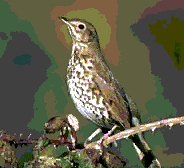
A Mistle Thrush

Mistle thrushes inhabit fairly open land such as the edges of woods, large gardens, orchards, and parkland. Their diet includes fruits and berries as well as invertebrates, such as worms and insects, fed to the young. Their liking for mistletoe berries gave rise to their common name. Breeding begins early in the year, often before February, when pairs defend territories. The female builds a nest made of grasses and mud high in a tree. She incubates 4-5 heavily mottled pale buff eggs for about 14 days. The chicks are fed a diet of snails, worms, insects, and insect larvae by both parents initially and finally just the father. The young leave the nest after some 14 days, at which time the female lays a second clutch. Outside the breeding season the birds live in family groups and loose flocks.
Mistle Thrush
Mistle Thrush, common name for one of several well-known songbirds. At 28 cm (101 in) long, it is the largest thrush in Britain. It is found across Europe, with the exception of Norway and the mountains of Scandinavia, and as far south as North Africa and eastwards as far as Siberia. Some seasonal movement of the birds occurs within this range. The bird's crown, back, and tail are greyish brown and its underparts are cream and marked with large spots. The white tips of the outer tail feathers are prominent during flight. In contrast to that of the song thrush, the mistle thrush's flight is heavily undulating. However, it makes the same distinct, alert ground movements, typical of thrushes, when perching. It has a fluty song, similar to that of the blackbird but much simpler.
A Mistle Thrush
 |