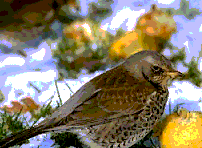
A Fieldfare

At 25 cm (10 in) long, fieldfares are a little smaller than the mistle thrush and larger than the song thrush. On the ground they have the typical, alert thrush stance and flight is less undulating than that of the mistle thrush. The head and rump are pale grey, the back is chestnut, and the tail is almost black. The underbelly and under-tail feathers are very pale. The breast is tinged orange-brown with a pale throat patch and is marked with black arrow-shaped “spots”.
Fieldfares usually nest in colonies in woods with birch, pine, or alder trees. In Britain they use conifer plantations, mixed woods, and moorland scrub. The nest is built with grass and mud at varying heights, even on the ground in the absence of trees. Between May and June, five to six eggs are laid. They are blue-green with rusty brown blotches. The female incubates for between 11 and 14 days with the male attending her at the nest. Both parents feed the offspring, which fledge at 12-16 days. In good years they are often able to rear two broods.
The diet is varied, including berries, windfall fruit, cereals, and most worms and insects. The invertebrates are of particular importance during the rearing period. In harsh winters the fieldfare will venture into gardens in search of food such as berberis and pyracantha berries.
Fieldfare
Fieldfare, common name for an attractive, gregarious thrush. It traditionally breeds in north-eastern Europe, migrating south-west to winter in western Europe. Wintering birds arrive in Britain from September to November and return eastwards during March and April. The breeding range has spread westwards across Europe, reaching France in the 1950s and mainland Britain in the 1960s. They nest in Scotland and the Pennines as far south as Derbyshire and resident populations are now present in these areas.
A Fieldfare
 |