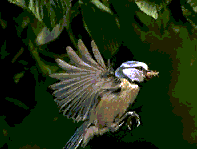
A Blue Tit

Their natural diet includes insects and their larvae, millipedes, spiders, and vegetable materials such as seeds, fruits, nuts, and berries. The adaptive nature of these birds, however, has resulted in their consumption of food put out by people on bird tables and in bird-feeding bags. The blue tit song is a high-pitched “tsee-tsee-tsee” followed by a trill; a “churr” call is also used. Like all tits, the resourceful blue tit is an acrobat, spending much of its time hanging upside down and seeking its food in the most inaccessible places. In some areas in the British Isles they have learnt to open milk bottles on doorsteps to reach the cream on top of the milk.
The nest is made in holes in trees or in man-made nest boxes. The chamber is lined with moss, hair, and feathers to create a small deep cup. Up to 16 brown-speckled white eggs are laid in spring. Incubation is carried out by the female and the eggs hatch after about 14 days. Both parents feed the chicks on small caterpillars for about 20 days and in a good year all the chicks can survive. The timing of the brood is critical in order to ensure that enough caterpillars are available to satisfy the young birds’ needs. For this reason blue tits normally have only a single brood each year.
Blue Tit
Blue Tit, common European perching tit, often seen in gardens feeding from bird tables, favouring peanuts and upturned coconuts. This attractive bird is only 11 cm (4 in) long and sports a yellow belly, blue crown, wings, and tail, and a greenish-blue back. The face is white with a black collar, nape, and eye stripe. The 14 subspecies have a vast range, including the British Isles, Europe, North Africa, and Russia. Their preferred habitats are deciduous woodland, hedgerows, large gardens, and suburbs—more or less anywhere with trees. True migrations do not occur among blue tits, although seasonal moves within the range are recorded.
A Blue Tit
 |